



ORCHID
Orchid is designed to reduce rice waste in logistics. It is an
AI-powered digital twin simulation that helps logistics managers anticipate issues, perform predictive maintenance, and make
data-driven decisions to prevent widespread food spoilage.
Role
UX Discovery
UX Research
UI Design
Duration
12 Weeks
Orchid


Problem
Fragmented, reactive logistics systems in developing countries lack real-time visibility and predictive coordination, resulting in large-scale food waste across the supply chain. In countries like India, where rice is a staple, these inefficiencies compound losses already evident in global yield reductions of 4.3% annually (2.64 million MT). Climate and weather volatility intensify these gaps, highlighting the need for machine-learning–driven logistics that can anticipate risk and safeguard food at scale.
Painpoints and opportunities:
We selected rice as our crop of interest because, despite being a non-perishable food, it faces unique challenges during and after harvest. Issues such as moisture content, flooding, and temperature fluctuations can significantly affect its quality, storage, and overall shelf life, necessitating effective monitoring and management solutions.
.jpg)
Competitive Analysis:

Persona

Luigi the logistic manager, Faces numerous hurdles throughout his schedule while trying to understand the situation of crops back in india due to power cuts as a result of flooding in monsoons.

Brainstorming:
This project involves with understanding the power of data in making decisions. We were given a prompt to create an interface primarily focusing on at least one of these concepts Visualizing, Simulating, Deciding, and reporting.Our tem was given simulation.

Technology
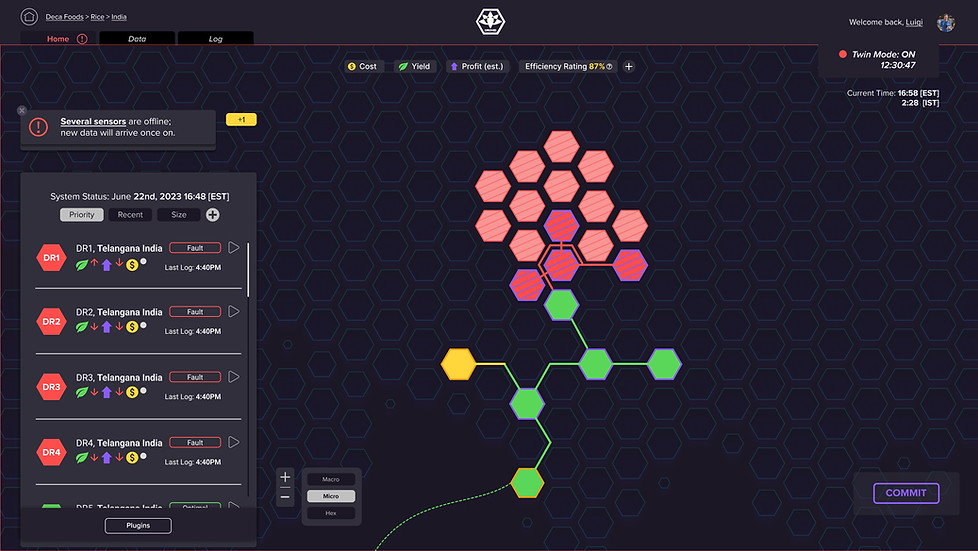
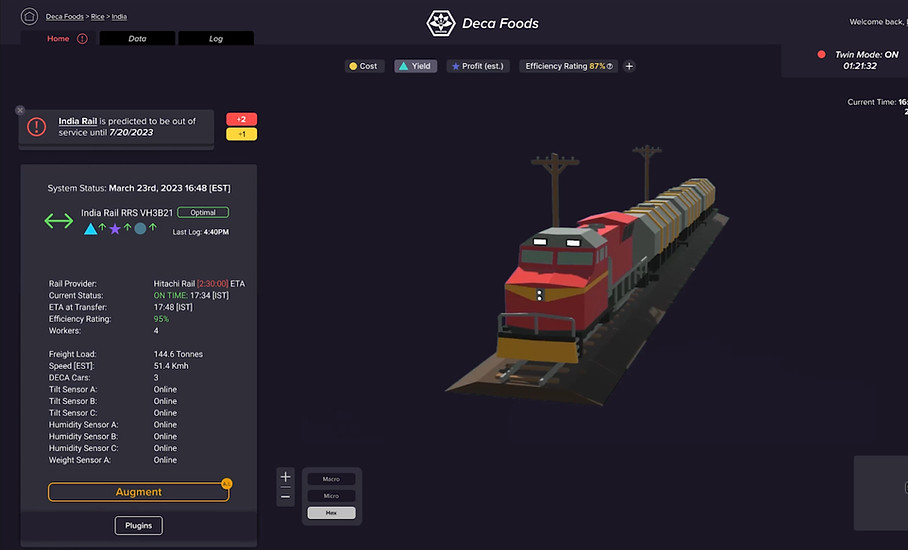
We have taken inspiration from maps, 3D assets and inventory design in video games such as civilization, clash of clans and combined them with visualizing sensor data and incorporating all of that in a dashboard for a logistic manager to use.

Low-Fidelity wireframes:


Task-Flow:
After creating the low-fidelity wireframes, we mapped the actions and tasks to the designed screens to determine the prototyping process.

Hi- fidelity Wire frames:
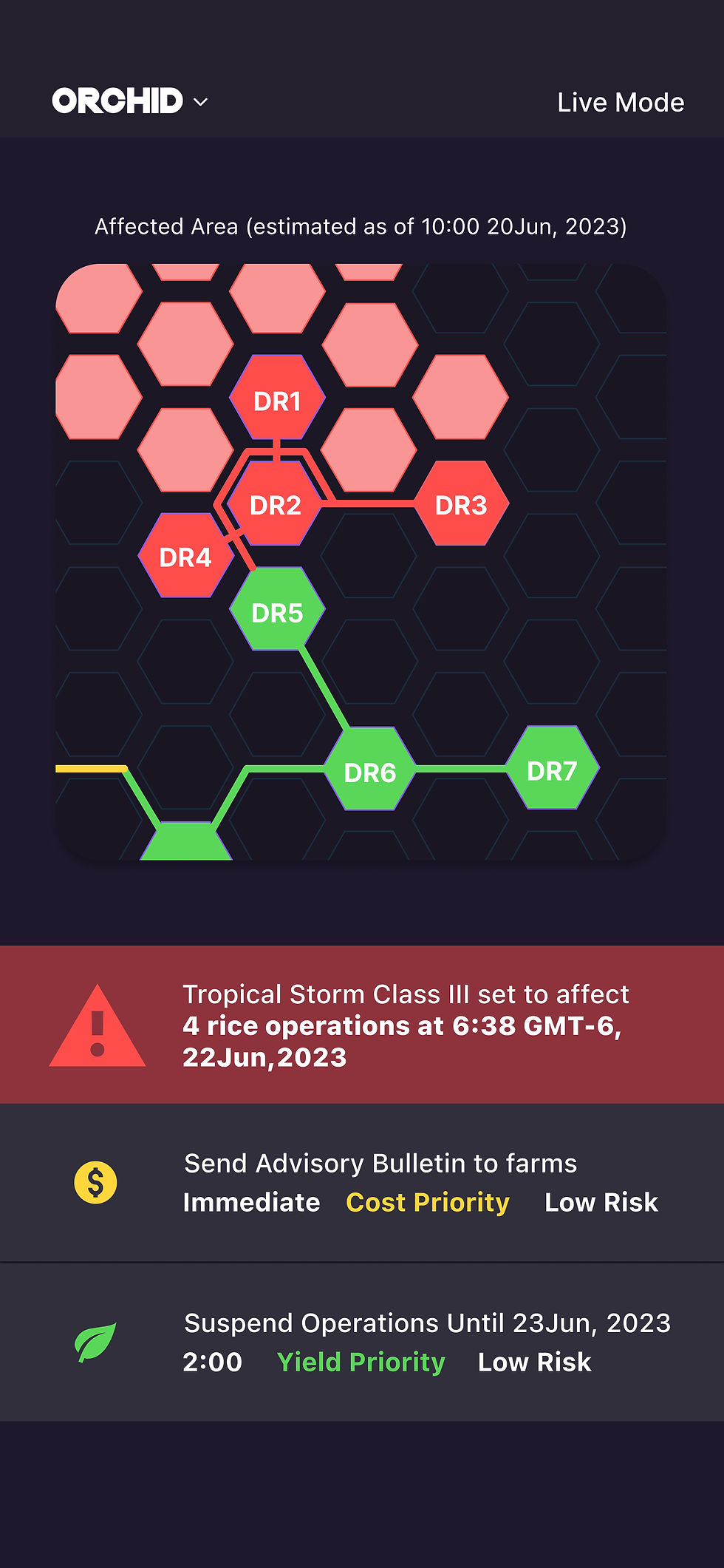
We received feedback to use red and green cautiously, as these colors can disrupt the experience for users with red-green color blindness. For the mobile interface, it was suggested to position the swipable choice cards at the bottom of the screen to make them easier to swipe with a thumb.


Demo Video

Demo Video
Main features:
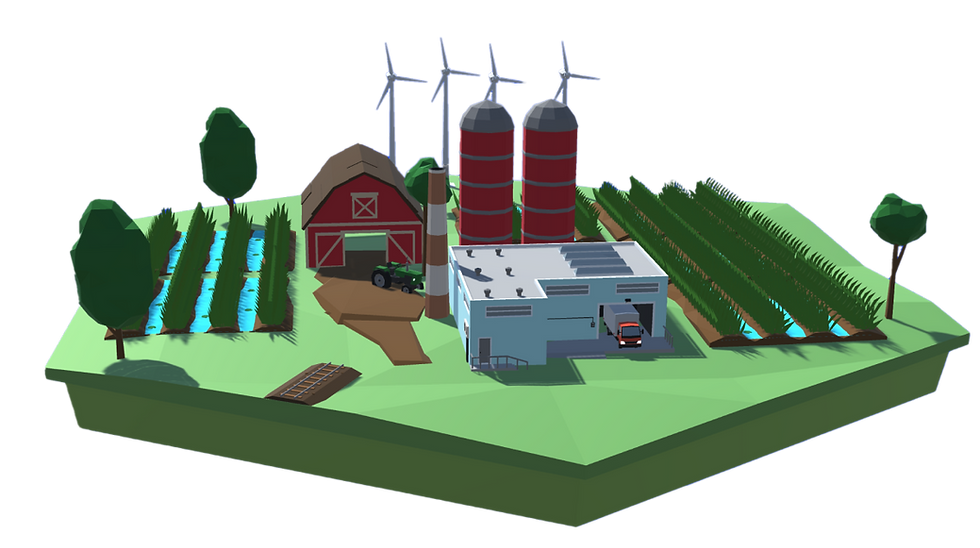
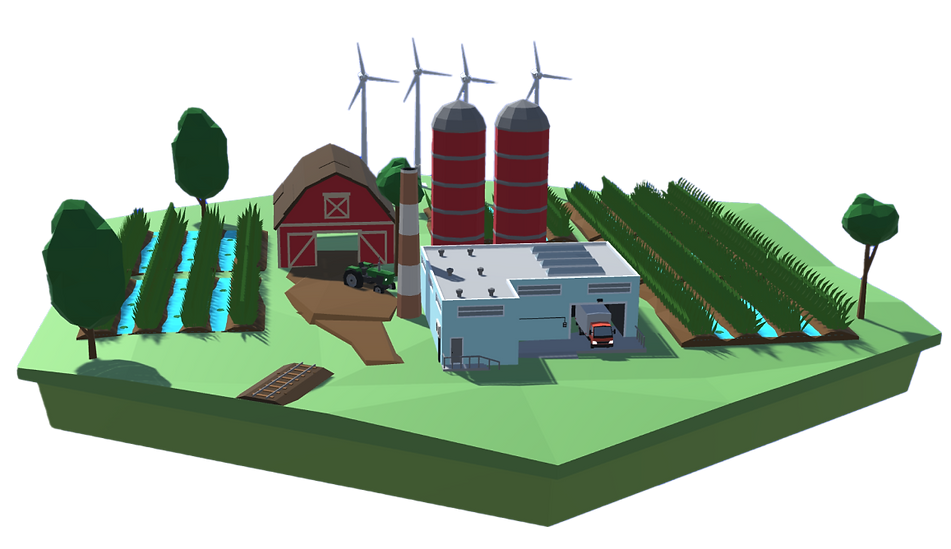
3D Digital Models:
Hi-fi models help make systems legible.
They display weather, time, faults, and more in an interactive & engaging model.
Flexible, multi-platform AI:
Constantly learning, the Orchid AI provides transparent decision making tools. Both mobile and desktop versions increase reactive abilities for users.


Outcomes
-
Designed a digital twin interface enabling logistics managers to monitor and manage rice
farm conditions in real time, bridging geographical and operational gaps. -
Integrated IoT sensor data to predict temperature and humidity fluctuations in storage units, reducing spoilage risk and improving supply chain reliability.
-
Delivered weather change alerts for monsoon onset and flood warnings, allowing timely interventions during critical harvest and storage periods.
-
Empowered stakeholders with actionable visual insights, reducing manual monitoring efforts and optimizing resource allocation in a developing-country context.
Orchid
Users:
Young adults with shopping addiction
Role:
Discovery,UX Design, Product Designer
Systems Design
Understanding Problem space for grain
Introducing game like design to logistic workflows
Building for Complexities and edge cases
Epilogue:
Learnt to Design for Data heavy, compliant workflows.
Apendix:
Learnt to Design for Data heavy, compliant workflows.